Picture Postcards with Scenes from Fairy Tales by Achille Lucien Mauzan
Like every artist from France, Mauzan could not avoid the spell of Perrault's fairy tales. In his case, several series of postcards with motifs from fairy tales. While Perrault wrote only eight fairy tales (all of them based on older variants), half of them still belong among the best-known stories in the world. In fact, it's hard to find somebody not familiar with Cinderella, Red Riding Hood, Puss in Boots, or Sleeping Beauty.
Mauzan illustrated at least six of Perrault's fairy tales (as far as I know), and at least four of them were published as a series of at least four cards (again, as far as I managed to find out). Here is a presentation of one card for each fairy tale. Hopefully, later we'll add more material or links to useful resources.
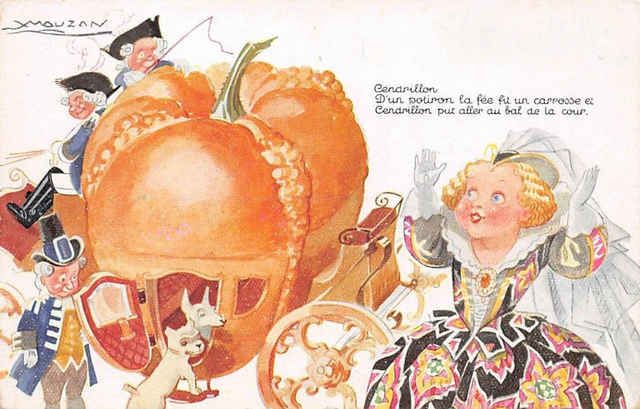
Did you know there are 1.300 cataloged versions of Cinderella's story all over the world? Charles Perrault gave her iconic glass shoes. He also introduced a fairy godmother, who transforms a pumpkin into a fancy carriage.
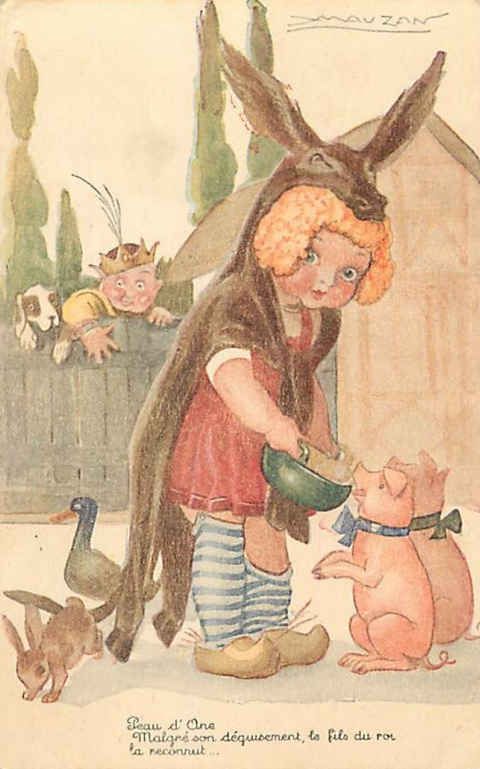
Donkey Skin never caught the popularity of the best-known Perrault's fairy tales. One of the reasons is very likely the theme. While, in essence, we are dealing with a plot similar to Cinderella, the major twist lies in the characters. Father, a widower, doesn't remarry because he can't find a lady of the same qualities as his late wife until he finds them at his daughter's!
A bit more about this unconventional fairy tale, sometimes also titled All Kinds of Fur, can be read here.
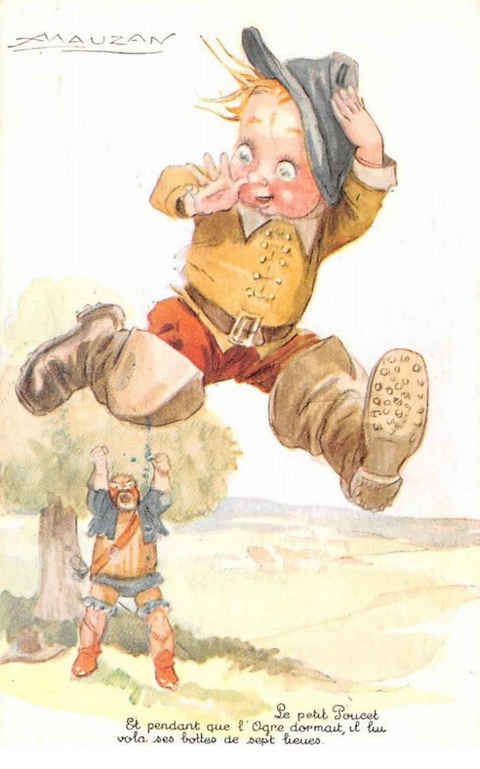
Hop-o'-My-Thumb has many titles. Thumbling, Little Thumb, or Seven-League Boots, are just some of them. Sometimes, so many options even lead to confusion. Don't mix it with Tom Thumb, for instance. Hop-o'-My-Thumb is essentially a French version of Hansel and Gretel.
Here are the main differences:
- instead of brother and sister, there are seven brothers,
- instead of the cannibalistic witch, there is a cannibalistic giant (who owns seven-league boots),
- instead of the witch, the giant's daughters die.
Still, the plot is almost the same. If you are not familiar with this story, here is a fun and educational article about Hop-o'-My-Thumb.
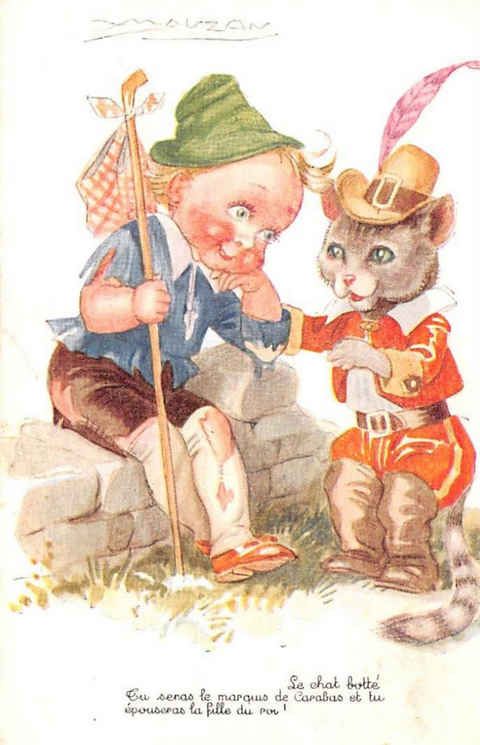
Puss in Boots is one of the most popular fairy tales in history and most people don't even realize how controversial it is actually. Its messages related to social skills, especially climbing the social ladder, are, mildly saying, iffy. The poor miller's son becomes a part of the royal circle after a series of immoral and even criminal actions. Still, one of its numerous morals (and 'morals') is quite positive.
You are cordially invited to read an educational and entertaining article about an attempt to 'repair' the story of Puss in Boots.
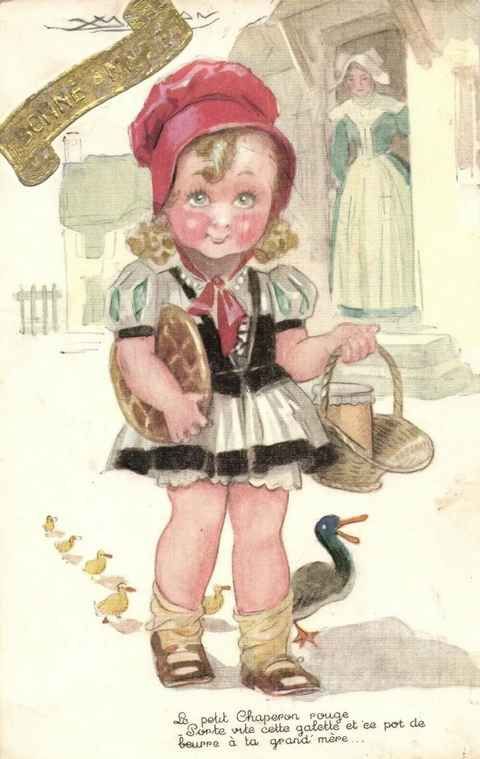
While we can trace the story about a little girl who wants to bring some food and drink to her ill grandmother but is interrupted by a wicked wolf, who is at least twelve hundred years old, it was Charles Perrault who gave her a red hood (which became a red cap in the Grimms' version), the color of life, but also the color of sin.
Did you know that Perrault's Red Riding Hood skipped the hunter at the end of the story? The famous French author believed the ending with the dead girl and granny was more effective!
(Please note, that this specific postcard has double usage: it's also a new year's greeting card.)
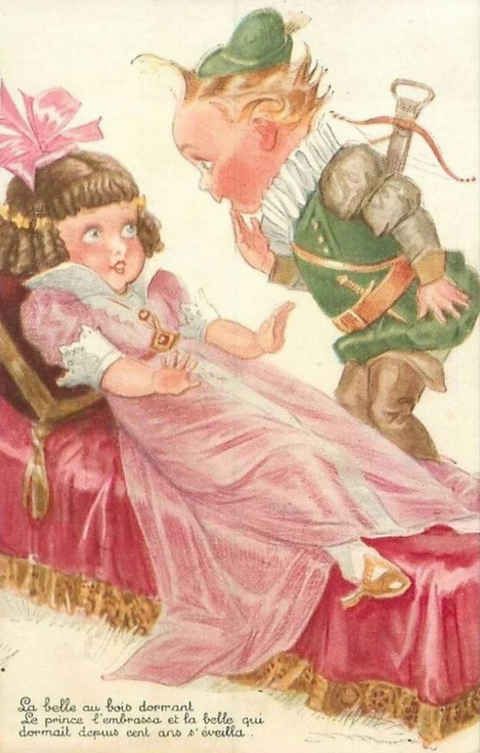
Sleeping Beauty in the Woods is the original title by Charles Perrault, but most people know this fairy tale by the shortened title and with the plot from the collection by Grimms (they titled it Briar Rose), which is heavily shortened. Jakob and especially Wilhelm were so determined to purify it, they cut above one half of the story. If they stayed faithful to Perrault's version (a variation of the older version by Giambattista Basile), the villain of this classic fairy tale would not be an evil fairy but - the prince's mother!
We hope you learned a lot of new interesting stuff and above all enjoyed the art of Achille Lucien Mauzan.